Beginning with How to Access Your Home Equity in Australia: A Guide to Line of Credit, the narrative unfolds in a compelling and distinctive manner, drawing readers into a story that promises to be both engaging and uniquely memorable.
Exploring the intricacies of home equity and line of credit in Australia opens up a world of financial possibilities, offering a practical guide for leveraging your property's value.
Understanding Home Equity
Home equity is the value of your home that you truly own, calculated by subtracting the outstanding mortgage balance from the current market value of your property. It is an essential asset in financial planning as it represents a source of potential funds that can be accessed for various purposes.
Calculation of Home Equity in Australia
In Australia, home equity is calculated by taking the current market value of your home and subtracting any outstanding mortgage balance or debts secured against the property. For example, if your home is valued at $500,000 and you owe $300,000 on your mortgage, your home equity would be $200,000.
Benefits of Tapping into Home Equity Through a Line of Credit
Accessing your home equity through a line of credit allows you to borrow against the equity in your home without having to sell your property. This can be a flexible and convenient way to access funds for various purposes such as home renovations, debt consolidation, investments, or emergencies.
Examples of Using Home Equity for Various Purposes
- Home Renovations: Using home equity to fund renovations can increase the value of your property while creating a more comfortable living space.
- Debt Consolidation: Consolidating high-interest debts into a lower-interest home equity line of credit can help save money on interest payments.
- Investments: Using home equity to invest in other properties, stocks, or businesses can potentially generate additional income or wealth.
- Emergency Expenses: Accessing home equity in times of unexpected financial need can provide a safety net for emergencies such as medical bills or job loss.
Line of Credit vs. Traditional Loan
When it comes to accessing your home equity in Australia, understanding the key differences between a line of credit and a traditional loan is crucial. While both options allow you to borrow against the equity in your home, they have distinct features that can impact your financial situation.Differentiation
- A line of credit operates like a credit card with a predetermined credit limit that you can draw from as needed, whereas a traditional loan provides a lump sum upfront.
- With a line of credit, you only pay interest on the amount you borrow, while a traditional loan requires regular repayments of both principal and interest.
Advantages and Disadvantages
- Advantages of a Line of Credit:
- Flexibility to access funds when needed.
- Interest is only charged on the borrowed amount.
- Ability to make interest-only payments.
- Disadvantages of a Line of Credit:
- Higher interest rates compared to traditional loans.
- Temptation to overspend due to easy access to funds.
Flexibility Comparison
- A line of credit offers more flexibility in terms of borrowing and repayment compared to a traditional loan.
- With a line of credit, you can borrow, repay, and redraw funds as needed within your approved limit, providing greater control over your finances.
Scenarios for Line of Credit
- When you have irregular income and need the flexibility to access funds when necessary, a line of credit can be a suitable option.
- If you have ongoing expenses or projects with varying costs, a line of credit allows you to manage these expenses more effectively.
Qualifying for a Line of Credit
Obtaining a line of credit in Australia is subject to certain eligibility criteria set by lenders. Understanding what factors lenders consider when assessing a borrower's application can help improve your chances of approval.Factors Considered by Lenders
- Credit Score: Lenders typically look at your credit score to evaluate your creditworthiness. A higher credit score indicates a lower risk for lenders, making it easier to qualify for a line of credit.
- Income Verification: Lenders assess your income to determine your ability to repay the borrowed funds. Having a stable income stream can positively impact your application.
- Debt-to-Income Ratio: Lenders also consider your debt-to-income ratio, which shows how much of your income goes towards paying debts. A lower ratio demonstrates financial stability and may increase your chances of approval.
Tips to Improve Qualification Chances
- Monitor Your Credit Score: Regularly check your credit report for any errors and work on improving your credit score by making timely payments and reducing outstanding debts.
- Provide Accurate Income Information: Ensure all income details are accurate and up-to-date to present a clear picture of your financial situation to lenders.
- Reduce Existing Debt: Lowering your existing debt levels can improve your debt-to-income ratio, making you a more attractive borrower for lenders.
Accessing Funds through a Line of Credit
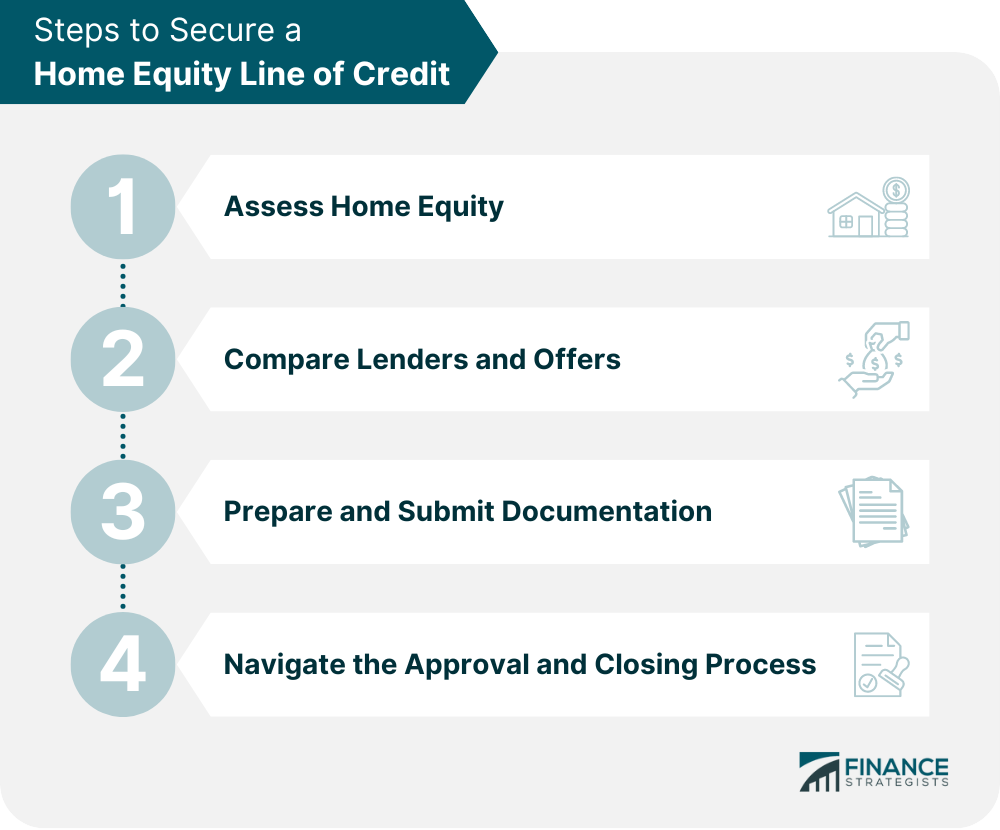
Accessing funds through a line of credit can provide flexibility and convenience, allowing you to borrow money as needed and pay interest only on the amount you use.
Methods of Withdrawing Funds
- Using a line of credit card: Some financial institutions offer a credit card linked to your line of credit account, allowing you to make purchases or withdraw cash directly.
- Transferring funds to your bank account: You can transfer funds from your line of credit account to your regular bank account for easy access.
- Writing checks: Some lenders provide checkbooks linked to your line of credit, enabling you to write checks to access funds.
Repayment Options
- Interest-only payments: You may have the option to make interest-only payments on the outstanding balance, reducing your monthly payment amount.
- Principal plus interest payments: Making payments towards both the principal amount borrowed and the accrued interest can help reduce the overall debt faster.
- Flexible repayment schedule: Some lenders offer the flexibility to choose your repayment schedule based on your financial situation.
Managing Borrowed Funds
- Use funds for planned expenses: Avoid using the line of credit for impulse purchases and instead allocate borrowed funds for planned expenses or investments.
- Monitor interest accrual: Keep track of the interest accumulating on the borrowed funds to better manage repayment and minimize overall costs.
- Create a repayment plan: Develop a repayment plan to ensure timely payments and avoid accumulating excessive debt over time.
Concluding Remarks

In conclusion, understanding how to access your home equity through a line of credit can be a game-changer in your financial strategy. By utilizing this guide effectively, you can make informed decisions and maximize the potential of your property's equity.
Popular Questions
What factors determine eligibility for a line of credit?
Lenders typically consider factors like credit score, income stability, and existing debts when assessing eligibility for a line of credit.
How can home equity be used for different purposes?
Home equity can be used for home renovations, debt consolidation, investment opportunities, or even emergency expenses, providing a versatile source of funds.
What are the advantages of a line of credit over a traditional loan?
A line of credit offers greater flexibility in accessing funds, lower interest rates on borrowed amounts, and the ability to reuse repaid funds without reapplying for a new loan.